
.png)
SNAP Cuts in Virginia: Feeling the Impact of H.R.1

People across the country are losing access to SNAP as a result of H.R.1, legislation passed in 2025 that included sweeping cuts to food access funding, and Virginia is no exception.
Since the enactment of H.R.1 in July 2025, SNAP participation has dropped by 2.5 million people, not because fewer families need help affording food, but because policy changes are making it harder to stay enrolled in the program.

New federal changes added stricter work requirements and administrative barriers that can cause people to lose benefits even if they are still eligible. Recent analysis from the Center on Budget and Policy Priorities shows that SNAP participation fell by 2.5 million people in just a few months after the legislation passed.
As fewer people receive federal food assistance, the need has not gone away, and costs remain high, with the USDA predicting a 3.6 percent increase in food prices in 2026.
What This Means for Virginia
Here in Virginia, the impacts are already measurable.
Virginia’s SNAP participation declined at least 12% as a result of H.R.1’s limitations to eligibility. Estimates suggest up to 447,000 households could lose some or all SNAP support as a result of the bill—about half of all SNAP participants in Virginia. Families with children, working adults with unstable schedules, and rural communities with fewer job and childcare options are expected to be some of the hardest hit.
“We’re starting to see a shift in behavior at the farmers market. SNAP customers aren’t buying less because they need less, they’re buying less because they have less,” said Connie Kenny. “That means fewer fresh fruits and vegetables on the table and more people turning to emergency food options.”
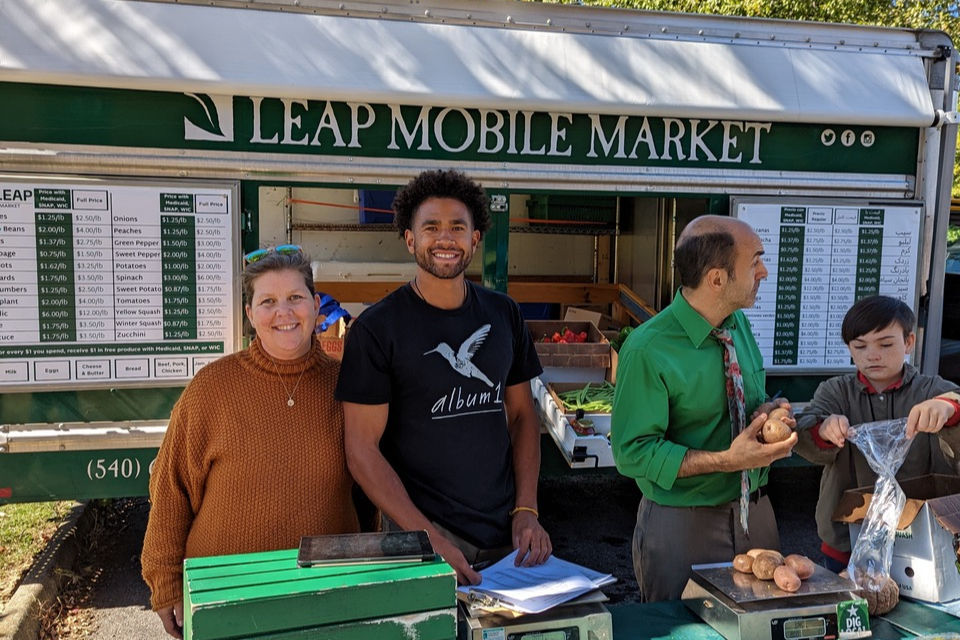
Kenny is the Food Access Manager at the Local Environmental Agriculture Project (LEAP), a Roanoke-based nonprofit that operates the West End Farmers Market and LEAP Mobile Market, among other programs. These markets are intentionally located in low-income neighborhoods to improve access to fresh, affordable food for households using SNAP, WIC, Medicaid, and other forms of assistance.
Even with nutrition incentives that offer free or discounted produce, Kenny reports that families are still purchasing less than usual, and more are turning to emergency food systems.
Food pantry visits increased by 20% across Virginia in 2025 and are expected to continue rising as more households lose benefits and must turn to alternative sources of food.
Why SNAP Cuts Matter
When SNAP benefits are reduced or lost, families are forced to choose between essentials like medical care, rent, transportation, and food. They may buy cheaper, less nutritious food, skip meals, or rely more heavily on food banks.
These changes affect more than individual households. SNAP dollars are a critical part of local economies, especially in rural areas. In rural southwest Virginia, 17% of Scott County residents rely on SNAP benefits to make ends meet. As these customers lose purchasing power, local farmers, small grocery stores, and local businesses lose essential income.
When people lose SNAP, we all feel it.
Virginia Fresh Match protects access to fruits and vegetables by helping SNAP customers stretch their limited benefits and keep fruits and vegetables on their shopping list. But nutrition incentive programs alone cannot replace SNAP. They work best when paired with a strong federal nutrition safety net.
Ways to Take Action
There is still time to reverse the impacts of H.R.1 by fully funding SNAP through H.R. 7567, otherwise known as the Farm Bill. Use the FRAC Action Network to urge your House Member to vote “no” when the House Farm Bill advances to the House floor, which could occur the week of April 27 or the first week of May.
Share this information with your network. Many people are unaware that SNAP cuts are already happening. Sharing this article or talking with friends, coworkers, and community members helps build awareness and momentum.
Support local food access programs. Organizations like Virginia Fresh Match help stretch food budgets and support farmers, but they rely on community support to continue this work.
Stay informed and engaged. Federal nutrition policy decisions have real, local impacts. Paying attention to upcoming votes and policy changes helps ensure these issues remain visible.


Comments